
KYNAM STORY-Fragrance Without Borders

Fragrance Without Borders – The Story of Kynam Agarwood
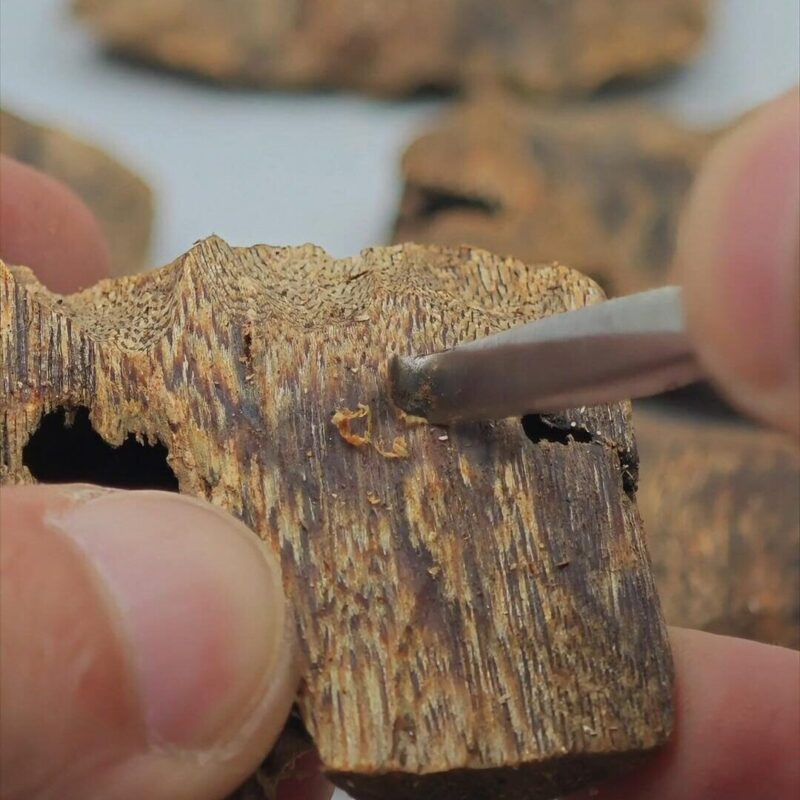
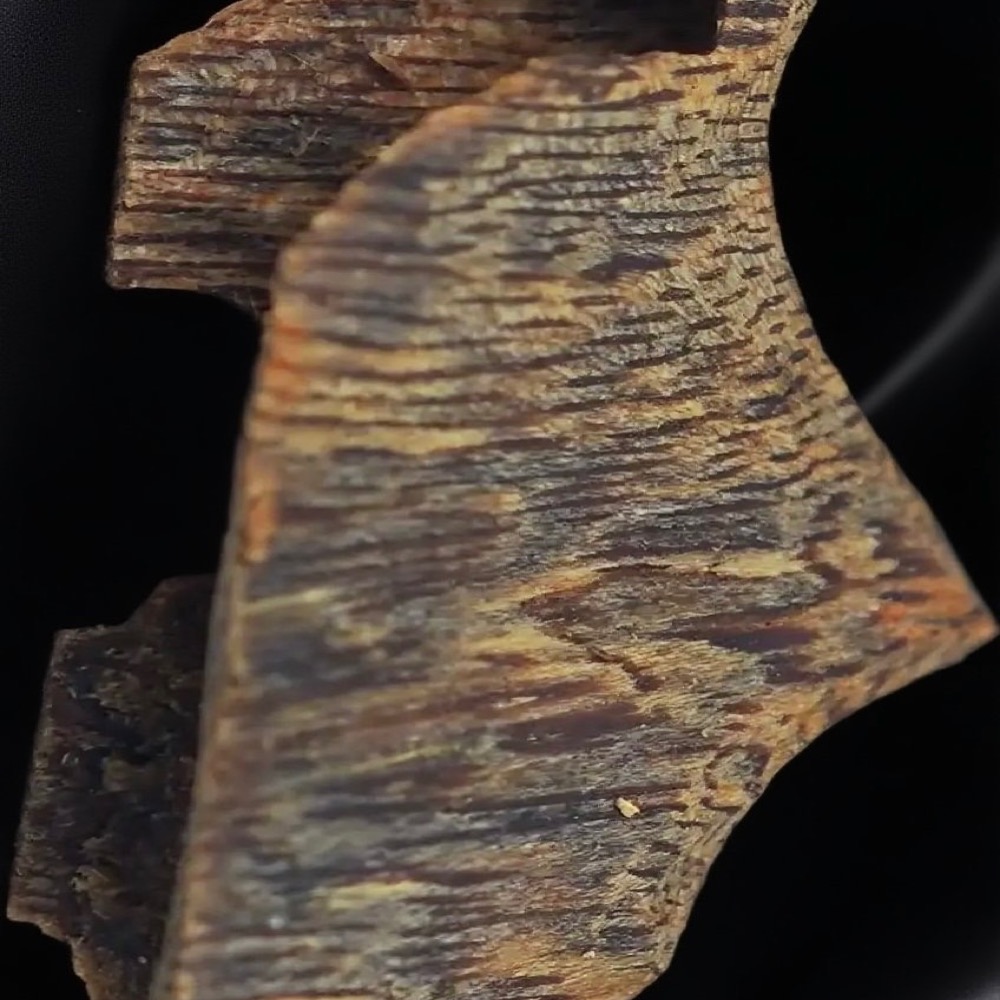
This piece of Kynam agarwood , China, is the “desert flower” bestowed by the Creator to the East. A thousand years ago, when the sound of camel bells echoed along the Silk Road, Arab merchants brought back a kind of “breathing black gold” from the East—Kynam agarwood. Its formation is akin to the miracle of the “fig tree and the olive tree” mentioned in the Quran: the white sandalwood tree, after enduring wounds, transforms its injuries into a womb that nurtures fragrance under the guidance of the Creator, ultimately condensing into a resin as smooth as beeswax. Among thousands of trees, only one or two produce this, making it rarer than Omani frankincense and more precious than Yemeni coffee.
At first whiff, it carries the sweet richness of date honey and the cool spiciness of the frankincense from the Sacred Mosque in Mecca, as if the morning breeze of the Red Sea brushes past the call to prayer tower of the ancient city of Sana’a. The middle notes resemble a rose garden in Persian miniatures, where the sticky sweetness of wild honey mingles with the roasted aroma of Basra dates, evoking memories of grandmother’s spice jam simmered in a copper pot. The base notes settle into the heaviness of Lebanese cedar, yet with a touch of the gentle warmth of the waters of the Gulf of Aqaba, leaving a lingering scent for seven days, akin to the essence of Arabic oud oil, a fragrance refined by time and faith.
In the East, scholars refer to agarwood as the “Bodhisattva of fragrances,” while in the Arab world, we know it as the “olfactory revelation of the Creator.” When you light it on a night of Ramadan, the rising blue smoke traces the dance of the genie from “One Thousand and One Nights.” The top notes awaken the determination of the pilgrim, the middle notes nourish the spirit of fasting, and the base notes guide the soul closer to paradise.
This is not a foreign spice, but a fragrant code that transcends a thousand years— from the rainforests of China to the deserts of Arabia, we use the same olfactory language to express awe and gratitude to the Creator.